 4.7
4.7Astronomy Camera
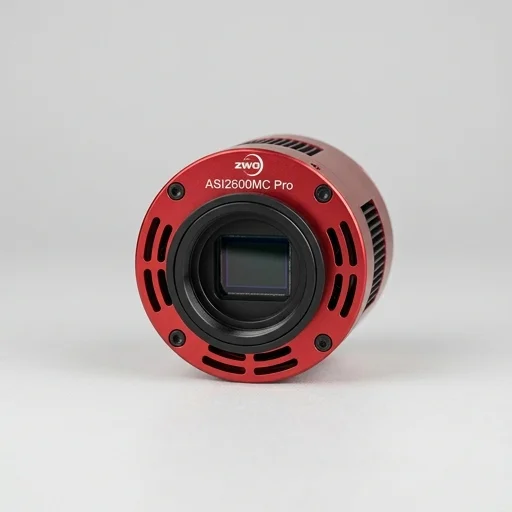
ZWO ASI2600MC Pro Astronomy Camera
- 26MP color sensor
- Deep cooling to -35°C
- Low noise imaging
Read review
 Nebula Porch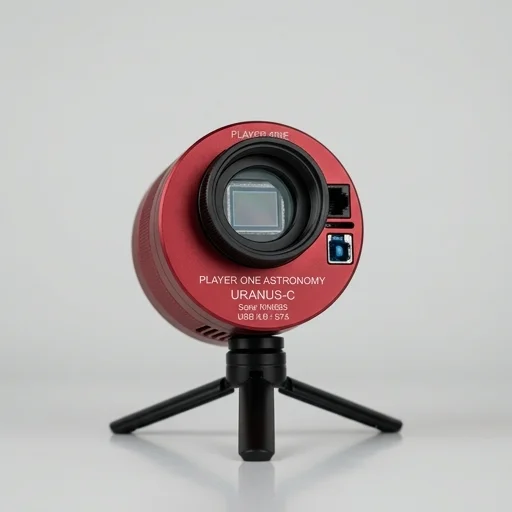
Player One Astronomy
★★★★☆ 4.4/5
The Player One Uranus-C is a versatile, budget-friendly astronomy camera that punches above its price point thanks to the IMX585 sensor's low noise and high sensitivity.
As an Amazon Associate we earn from qualifying purchases. Price and availability are checked at the retailer.
Verdict
The Player One Uranus-C is a versatile, budget-friendly astronomy camera that punches above its price point thanks to the IMX585 sensor's low noise and high sensitivity. It's a strong choice for astrophotographers doing both planetary imaging and shorter deep-sky exposures, though those needing extended cooled exposures may want to pair it with additional cooling accessories or consider a cooled variant.
Full review
The Player One Uranus-C is a dedicated astronomy camera engineered for amateur and enthusiast astrophotographers who want a versatile, high-performance imaging solution for both planetary and deep-sky work. Built around the Sony IMX585 back-illuminated CMOS sensor, this camera delivers excellent quantum efficiency and low read noise, making it well suited to capturing faint nebulae, galaxies, and star clusters as well as crisp, detailed images of the Moon and planets. Its color sensor design simplifies the imaging workflow for those who prefer single-shot color capture over the complexity of filter wheels and multiple exposures, while still providing enough resolution and dynamic range to satisfy more advanced imaging techniques like lucky imaging and stacking.
The Uranus-C features a robust cooling-free design that relies on efficient sensor architecture and low-noise readout electronics to keep thermal noise manageable during long imaging sessions, though many astrophotographers pair it with dew heaters or ambient temperature control accessories in humid conditions. Its USB 3.0 interface ensures fast data transfer rates, which is critical when capturing high frame-rate video for planetary imaging or when stacking hundreds of exposures for deep-sky targets. The camera's compact and lightweight housing makes it easy to mount on a wide range of telescopes, from small refractors used for wide-field nebula photography to larger Schmidt-Cassegrain or Newtonian telescopes favored for high-resolution planetary and lunar imaging.
Compatible with popular astrophotography software platforms, the Player One Uranus-C integrates smoothly into existing imaging setups, supporting ASCOM and native SDK drivers for seamless control over exposure settings, gain, and offset. Its sensitivity and resolution make it a strong choice for capturing the intricate cloud bands of Jupiter, the ring structure of Saturn, or the subtle color gradients within the Orion Nebula. Whether used by a beginner stepping into serious astrophotography or a seasoned imager seeking a reliable, high-quality secondary camera, the Uranus-C offers a compelling balance of sensitivity, resolution, and ease of use that fits naturally into a dedicated telescope and astronomy imaging rig.
The trade-off
6 strengths · 4 compromises
Nearby
Closest matches in Cameras & imaging by aperture and score.
4.7Astronomy Camera
 4.7
4.7Astronomy Camera
 4.7
4.7Astronomy Camera
 4.6
4.6Astronomy Camera