 4.7
4.7Astronomy Camera
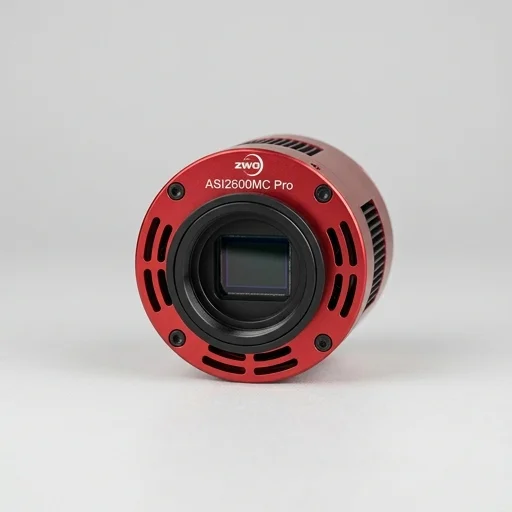
ZWO ASI2600MC Pro Astronomy Camera
- 26MP color sensor
- Deep cooling to -35°C
- Low noise imaging
Read review
 Nebula Porch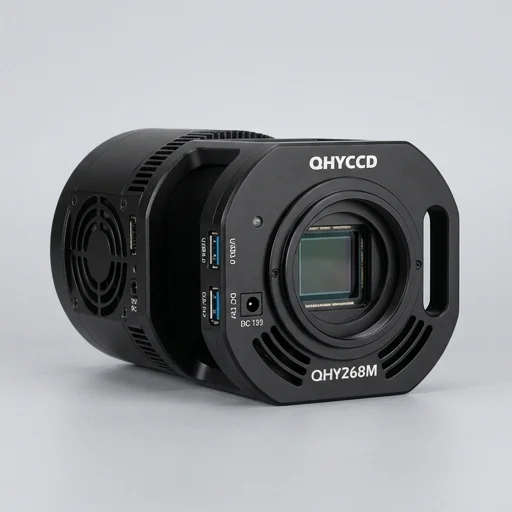
QHYCCD
★★★★★ 4.6/5
The QHYCCD QHY268M is a superb monochrome astrophotography camera for serious deep-sky imagers, combining a large APS-C sensor, high QE, and strong cooling performance.
As an Amazon Associate we earn from qualifying purchases. Price and availability are checked at the retailer.
Verdict
The QHYCCD QHY268M is a superb monochrome astrophotography camera for serious deep-sky imagers, combining a large APS-C sensor, high QE, and strong cooling performance. While it demands investment in filters and computing resources, the image quality and flexibility make it a top-tier choice for advanced amateur and semi-professional astrophotography.
Full review
The QHYCCD QHY268M is a monochrome deep-sky imaging camera built around the Sony IMX571 APS-C format back-illuminated CMOS sensor, a chip prized among astrophotographers for its 16-bit readout, low read noise, and generous 26 megapixel resolution across a 3.76 micron pixel pitch. As a dedicated monochrome unit, it forgoes the Bayer color filter array found in its color sibling, the QHY268C, allowing every photosite to capture full luminance data without interpolation. This makes it especially suited to narrowband imaging with hydrogen-alpha, oxygen-III, and sulfur-II filters, as well as traditional LRGB workflows using a filter wheel, delivering sharper detail and better sensitivity than comparable color sensors when paired with the right filter set.
Thermal management is a central feature of the QHY268M, which incorporates a two-stage thermoelectric cooling system capable of pulling the sensor temperature down to roughly minus 35 degrees Celsius below ambient. This deep, regulated cooling suppresses dark current substantially, enabling long exposure subs with minimal thermal noise, a critical requirement for faint nebulae, galaxies, and other extended deep-sky targets that demand hours of cumulative integration time. The camera also offers dual gain modes, including a high-gain low-noise setting well suited to narrowband work under light-polluted skies, and a low-gain high-full-well setting favorable for broadband targets with a wide dynamic range, such as star clusters and galaxies with bright cores alongside faint outer structures. An anti-dew heating window further protects against condensation forming on the optical window during cold-weather sessions.
Physically, the QHY268M is built with a rugged, compact housing designed for observatory and field use, featuring a standard M54 or M42 nosepiece thread depending on configuration, along with USB 3.0 connectivity for fast data transfer during high-frame-rate or large-file deep-sky sessions. It integrates smoothly with popular imaging software such as N.I.N.A., SharpCap, and MaxIm DL through native SDK and ASCOM driver support, making it a flexible choice for both automated observatory setups and portable rigs used by amateur astronomers. Combined with its low amp-glow design and mechanical shutter-free readout, the QHY268M has become a favored tool among astrophotographers seeking a high-resolution, scientifically capable monochrome sensor for capturing detailed, high-fidelity images of the night sky.
The trade-off
6 strengths · 5 compromises
Nearby
Closest matches in Cameras & imaging by aperture and score.
4.7Astronomy Camera
 4.7
4.7Astronomy Camera
 4.7
4.7Astronomy Camera
 4.6
4.6Astrophotography Controller