 4.7
4.7Astronomy Camera
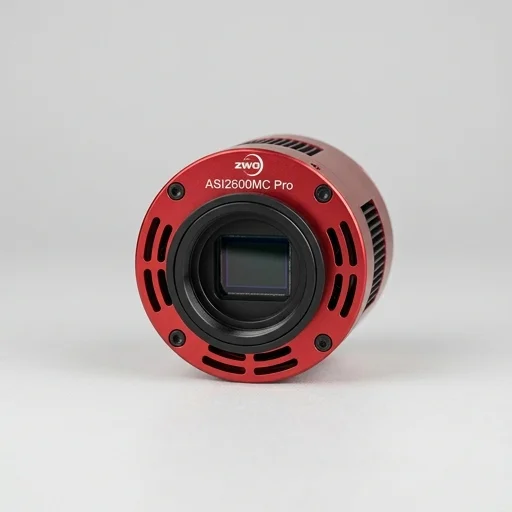
ZWO ASI2600MC Pro Astronomy Camera
- 26MP color sensor
- Deep cooling to -35°C
- Low noise imaging
Read review
 Nebula Porch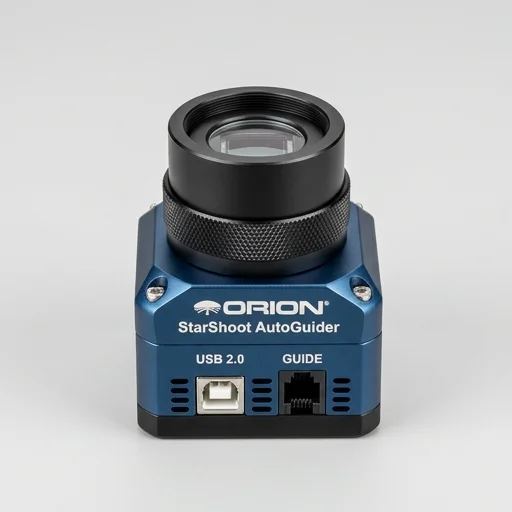
Orion
★★★★☆ 4.1/5
The Orion StarShoot AutoGuider remains a solid, budget-friendly choice for astrophotographers looking to add automated guiding to their imaging setup.
As an Amazon Associate we earn from qualifying purchases. Price and availability are checked at the retailer.
Verdict
The Orion StarShoot AutoGuider remains a solid, budget-friendly choice for astrophotographers looking to add automated guiding to their imaging setup. While its USB 2.0 interface and lack of cooling show its age compared to newer autoguiders, it still reliably locks onto guide stars and works seamlessly with free software like PHD2. For beginners and intermediate imagers wanting to reduce star trailing on long exposures without breaking the bank, this camera continues to deliver dependable results.
Full review
The Orion StarShoot AutoGuider is a dedicated astronomical guide camera built to solve one of the most persistent challenges in long-exposure astrophotography: keeping a telescope precisely locked onto a target despite the small mechanical imperfections and periodic errors inherent in even well-made equatorial mounts. Rather than functioning as a primary imaging camera, this device is designed to work alongside your main astrophotography setup, typically mounted on a separate small guide scope or attached via an off-axis guider, where it continuously monitors a guide star and feeds correction data back to your mount. Built around a sensitive CCD sensor, the StarShoot AutoGuider is optimized specifically for detecting faint stars quickly, giving it the sensitivity needed to lock onto a suitable guide star even in star fields that are relatively sparse, which is a common limitation with less capable guiding cameras.
In practical use, the Orion StarShoot AutoGuider connects to a computer via USB and works in tandem with autoguiding software, most notably the freely available PHD Guiding program, which was in fact developed with this very camera in mind, making the pairing especially seamless for beginners entering the world of guided astrophotography. Once calibrated, the system analyzes the position of the selected guide star at regular intervals, detects any drift caused by tracking errors, atmospheric effects, or mechanical flexure, and sends real-time correction pulses to the mount through an ST-4 compatible autoguider port. This closed-loop process allows imagers to capture exposures lasting many minutes rather than mere seconds, dramatically improving the signal-to-noise ratio in deep-sky images of galaxies, nebulae, and star clusters that would otherwise be impossible to capture with unguided tracking alone.
Physically compact and lightweight, the StarShoot AutoGuider is designed to be unobtrusive on a telescope setup, minimizing added weight and balance issues on the mount while still providing dependable guiding performance night after night. It typically ships with the necessary USB and ST-4 guider cables, making it straightforward to integrate into an existing astrophotography rig without requiring additional specialized adapters. For amateur astronomers who have progressed from casual visual observing into serious long-exposure imaging, this autoguider camera represents an accessible and cost-effective entry point into precision guided astrophotography, bridging the gap between basic camera-and-tripod astrophotography and the more advanced, highly refined tracking accuracy required for capturing detailed, pinpoint-star images of faint deep-sky objects.
The trade-off
6 strengths · 6 compromises
Nearby
Closest matches in Cameras & imaging by aperture and score.
4.7Astronomy Camera
 4.7
4.7Astronomy Camera
 4.7
4.7Astronomy Camera
 4.6
4.6Astronomy Camera