 4.7
4.7Astronomy Camera
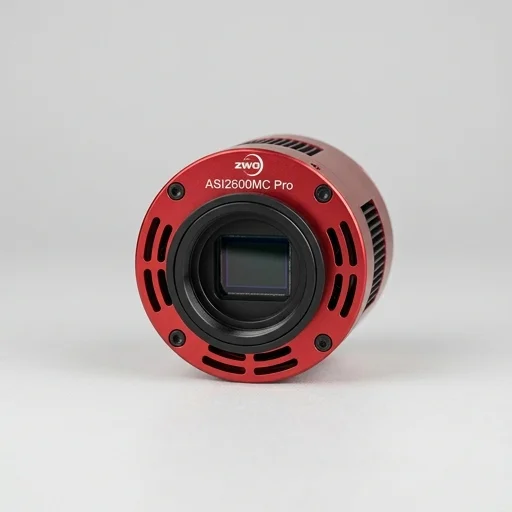
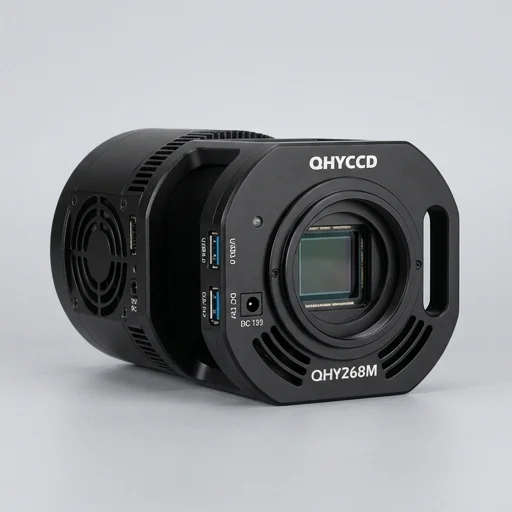
ZWO ASI2600MC Pro Astronomy Camera
- 26MP color sensor
- Deep cooling to -35°C
- Low noise imaging
Read review
 Nebula Porch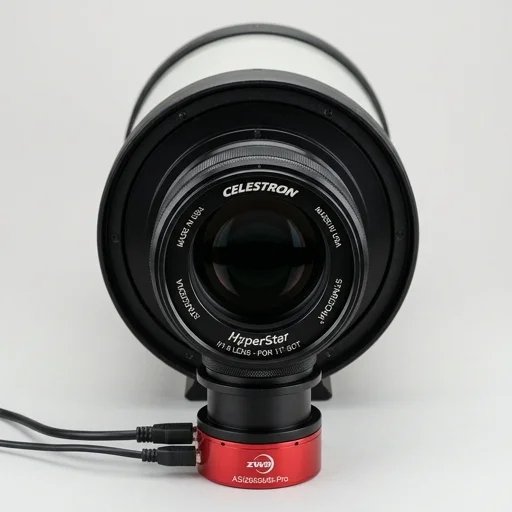
Celestron
★★★★☆ 4.5/5
The Celestron HyperStar Lens is a game-changing accessory for astrophotographers who own compatible Schmidt-Cassegrain telescopes and want to capture faint deep-sky objects with dramatically reduced exposure times.
As an Amazon Associate we earn from qualifying purchases. Price and availability are checked at the retailer.
Verdict
The Celestron HyperStar Lens is a game-changing accessory for astrophotographers who own compatible Schmidt-Cassegrain telescopes and want to capture faint deep-sky objects with dramatically reduced exposure times. While it requires an upfront investment and a learning curve for setup and collimation, the payoff in imaging speed and field of view makes it a favorite among serious astrophotography enthusiasts.
Full review
The Celestron HyperStar lens system represents one of the most transformative accessories available to deep-sky astrophotographers working with Schmidt-Cassegrain telescopes. Rather than shooting through the telescope in its native configuration, HyperStar replaces the secondary mirror assembly with a specialized lens corrector that allows imaging directly at the front of the optical tube, near prime focus. This engineering approach converts a telescope that would normally operate around f/10 into an remarkably fast f/2 system, slashing exposure times dramatically while preserving the aperture and light-gathering power of the original instrument. For imagers chasing faint nebulae, galaxies, and other extended deep-sky objects, this speed advantage means capturing in minutes what might otherwise require hours of cumulative exposure.
Compatibility spans several popular Celestron EdgeHD and standard Schmidt-Cassegrain models, with specific HyperStar versions engineered to match the optical prescription of each telescope aperture, whether an 8-inch, 9.25-inch, 11-inch, or 14-inch tube. Installation involves removing the secondary mirror holder and mounting the HyperStar lens assembly along with a compatible camera in its place, a process designed to be reversible so the telescope can return to conventional Cassegrain focus for planetary or lunar work when desired. The lens itself is a multi-element optical corrector that flattens the field and controls aberrations across a wide imaging circle, allowing modern CMOS and CCD astronomy cameras to deliver sharp stars from center to edge. Because the camera sits at the front of the tube, cable management and balance considerations become part of the setup routine, and Celestron provides mounting rings and adapters tailored to common imaging camera bodies to streamline this front-heavy configuration.
Beyond raw speed, the HyperStar system appeals to astrophotographers because it opens the door to capturing large, faint targets that are otherwise impractical with traditional slow-focal-ratio SCT imaging. Wide nebular structures, comet tails, and extended galactic detail become accessible in single-night imaging sessions rather than multi-night marathons, making the accessory particularly valuable for imagers with limited clear-sky windows or those working under light-polluted skies where shorter subexposures reduce sky-glow buildup. The optical assembly is built with coated glass elements to maximize throughput and minimize reflections, and its compact form factor keeps the telescope's overall balance manageable despite the shift in optical path. For dedicated deep-sky imagers already invested in the Celestron SCT ecosystem, the HyperStar lens stands as a well-regarded upgrade path that fundamentally changes what their existing telescope can achieve behind a camera sensor.
The trade-off
6 strengths · 6 compromises
Nearby
Closest matches in Cameras & imaging by aperture and score.
4.7Astronomy Camera
 4.7
4.7Astronomy Camera
 4.7
4.7Astronomy Camera
 4.6
4.6Astronomy Camera