 4.3
4.3Telescope
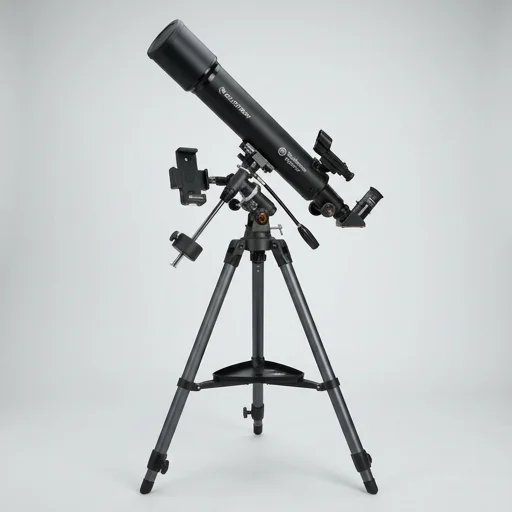
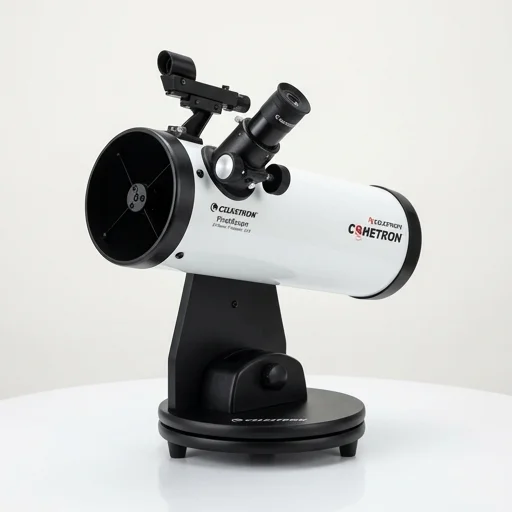
Celestron StarSense Explorer LT 80AZ
- App-guided star navigation
- Beginner-friendly setup
- Sharp lunar views
Read review
 Nebula Porch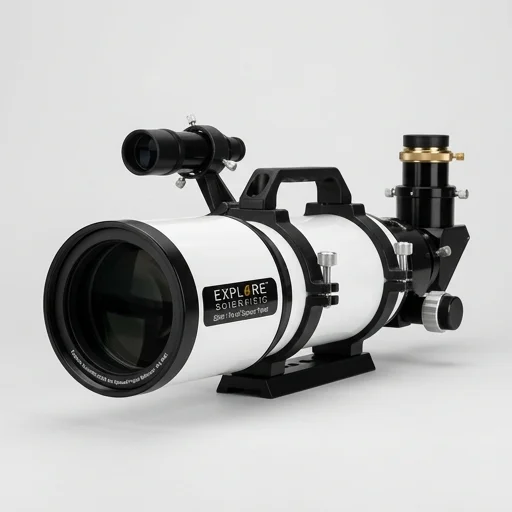
Explore Scientific
★★★★☆ 4.5/5
The Explore Scientific ED80 is a well-regarded entry-level apochromatic refractor that delivers crisp, high-contrast views and strong performance for both visual astronomy and astrophotography.
As an Amazon Associate we earn from qualifying purchases. Price and availability are checked at the retailer.
Verdict
The Explore Scientific ED80 is a well-regarded entry-level apochromatic refractor that delivers crisp, high-contrast views and strong performance for both visual astronomy and astrophotography. Its portable design, quality dual-speed focuser, and ED glass make it an excellent grab-and-go telescope or a solid second scope for imaging setups, though serious astrophotographers will want to budget for a matching field flattener.
Full review
The Explore Scientific ED80 is a premium apochromatic refractor telescope built for astronomy enthusiasts who demand crisp, color-corrected views of the night sky. Featuring an 80mm objective lens crafted from FCD-1 extra-low dispersion glass, this doublet refractor virtually eliminates chromatic aberration, delivering pinpoint stars and high-contrast images of planets, lunar craters, and deep-sky objects. With a focal ratio around f/6, the ED80 strikes an excellent balance between wide-field views and the resolving power needed for detailed observation, making it equally suited to casual stargazing sessions and more serious visual astronomy work.
Beyond visual use, the Explore Scientific ED80 has earned a strong reputation among astrophotographers as an accessible entry point into imaging the cosmos. Its optical design minimizes false color and maintains sharp focus across the field, which is essential when capturing long-exposure shots of nebulae, star clusters, and galaxies. The telescope typically features a smooth dual-speed rack-and-pinion focuser, allowing for precise fine-tuning when attaching a DSLR, mirrorless camera, or dedicated astronomy camera. Many versions of the ED80 also include a retractable dew shield to protect the objective lens and reduce stray light, along with a sturdy tube construction—sometimes in carbon fiber—that helps maintain thermal stability during extended imaging sessions in varying temperatures.
Portability and versatility make the ED80 a favorite for astronomers who travel to dark-sky locations or simply want a manageable setup for backyard use. Its compact form factor and relatively light weight allow it to be paired with a variety of mounts, from simple altazimuth setups for visual work to equatorial mounts with tracking capabilities for astrophotography. Complete with a sturdy carrying case in many packages, tube rings for balanced mounting, and compatibility with standard 2-inch and 1.25-inch eyepieces, the Explore Scientific ED80 offers a well-rounded refractor experience. Whether you're just beginning your journey into telescopic observation or looking to expand an existing astronomy kit with a dependable, high-performance instrument, this refractor delivers reliable optical quality night after night.
The trade-off
6 strengths · 5 compromises
Nearby
Closest matches in Telescopes by aperture and score.
4.3Telescope
 4.2
4.2Travel Telescope
 4.6
4.6Refractor Telescope
 4.0
4.0Telescope