 3.9
3.9Telescope
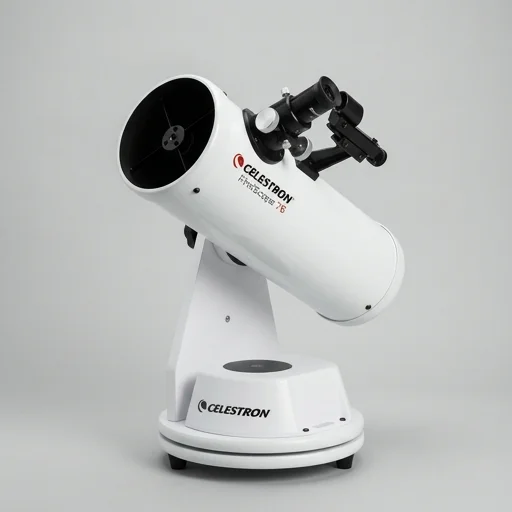
Celestron FirstScope 76
- Beginner-friendly tabletop design
- Affordable entry-level telescope
- Great for kids
Read review
 Nebula Porch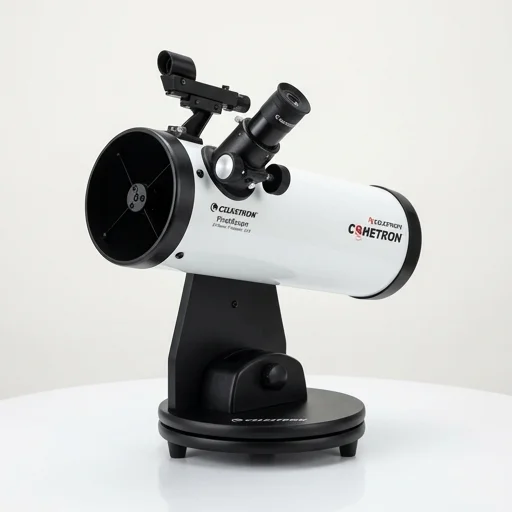
Celestron
★★★★☆ 4.0/5
The Celestron Cometron FirstScope is a budget-friendly, portable telescope perfect for beginners, casual stargazers, and kids just starting their astronomy journey.
As an Amazon Associate we earn from qualifying purchases. Price and availability are checked at the retailer.
Verdict
The Celestron Cometron FirstScope is a budget-friendly, portable telescope perfect for beginners, casual stargazers, and kids just starting their astronomy journey. While its small 76mm aperture and basic accessories limit deep detail on planets and faint deep-sky objects, it excels at wide-field views of the moon, star clusters, and comets. Its simple tabletop Dobsonian design makes it incredibly easy to set up and use, making it a great low-commitment introduction to the hobby.
Full review
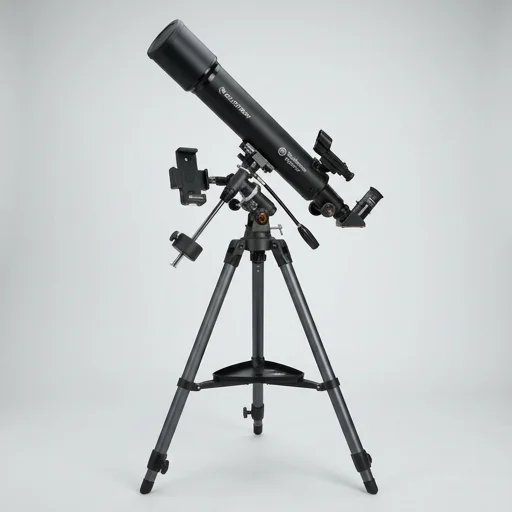
The Celestron Cometron FirstScope is a compact tabletop reflector telescope designed specifically for wide-field viewing of comets, star clusters, and broad swaths of the night sky, making it an appealing entry point for beginners who want an authentic astronomical experience without a steep learning curve. Built around a 76mm aperture Newtonian reflector with a fast f/4 focal ratio, the scope gathers enough light to reveal dim, extended objects like comet tails and open star clusters while keeping the overall package small enough to sit on a table, porch railing, or car hood. Its low magnification and wide true field of view are intentional design choices, since comets and large deep-sky objects are best appreciated at low power across a broad swath of sky rather than zoomed in tightly, and the Cometron is tuned for exactly that kind of casual, grab-and-go stargazing.
The physical build emphasizes simplicity and portability. The telescope rests on a small dome-shaped alt-azimuth base that allows smooth panning left-right and tilting up-down by hand, with no motors, computerized tracking, or complicated setup procedures to worry about. This manual point-and-look design means a first-time user can be observing the Moon, Pleiades, or a passing comet within minutes of opening the box, without needing to learn star alignment routines or software. The included accessories are kept minimal but functional, typically consisting of two eyepieces that provide different magnification levels for switching between wide starfield views and slightly closer looks at brighter targets, along with a simple finder or sighting notch to help aim the tube toward the desired patch of sky.
Because of its lightweight tube and small footprint, the Cometron FirstScope is easy to transport to darker viewing locations away from city lights, which meaningfully improves the visibility of faint comets and nebulous objects that get washed out by light pollution. It suits families introducing children to astronomy, casual hobbyists who want a no-fuss scope for spontaneous sky watching, and comet enthusiasts who want a dedicated wide-field instrument to complement a more powerful telescope used for planetary or lunar detail. While it isn't intended for high-magnification views of planetary surface features or tightly resolved double stars, its strength lies in delivering bright, expansive views of the sky's larger-scale wonders, making it a practical and affordable tool for anyone drawn to the fleeting, wide-field spectacle of a passing comet.
The trade-off
6 strengths · 6 compromises
Nearby
Closest matches in Telescopes by aperture and score.
3.9Telescope
 4.6
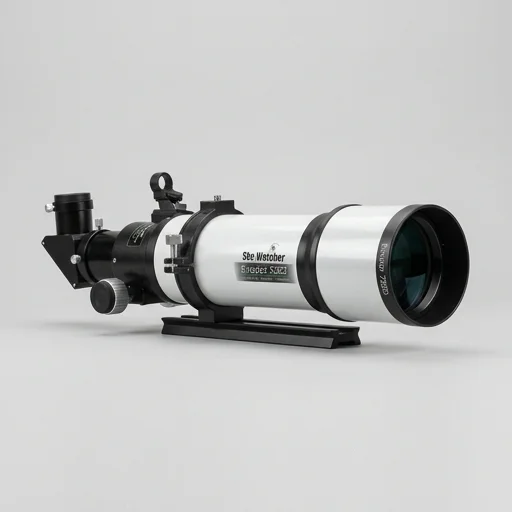
4.6Refractor Telescope
 4.5
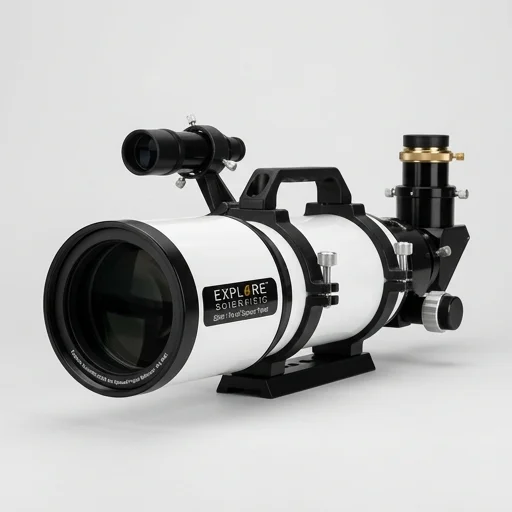
4.5Refractor Telescope
 4.3
4.3Telescope