 4.8
4.8Eyepiece
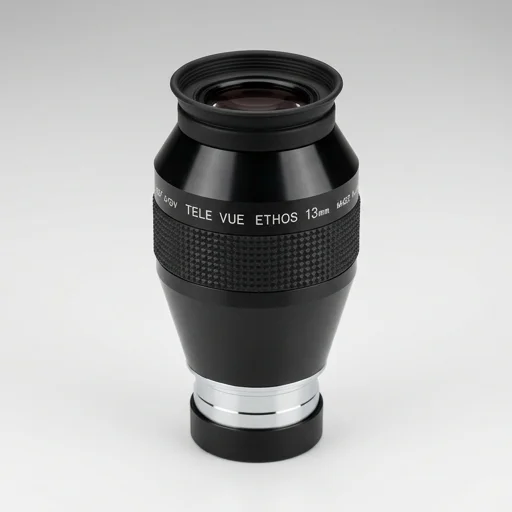
TeleVue Ethos Eyepiece
- 100-degree field of view
- Exceptional edge sharpness
- Premium build quality
Read review
 Nebula Porch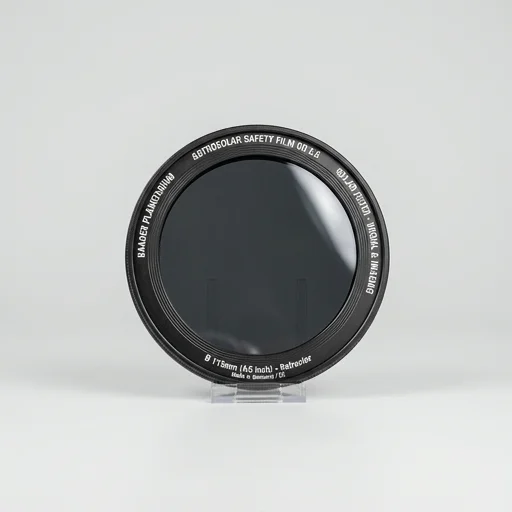
Baader Planetarium
★★★★★ 4.6/5
The Baader Planetarium AstroSolar Safety Film solar filter is a trusted, budget-friendly solution for safe solar observing and imaging, delivering crisp sunspot and granulation detail while meeting strict optical density safety standards.
As an Amazon Associate we earn from qualifying purchases. Price and availability are checked at the retailer.
Verdict
The Baader Planetarium AstroSolar Safety Film solar filter is a trusted, budget-friendly solution for safe solar observing and imaging, delivering crisp sunspot and granulation detail while meeting strict optical density safety standards. Its lightweight film construction is a practical alternative to heavier glass filters, though careful handling and secure cell fitting are essential to maintain both safety and image quality. Overall it remains a top recommendation for amateur solar astronomers.
Full review
The Baader Planetarium Solar Filter stands as one of the most trusted names in solar observation equipment, relied upon by amateur astronomers, solar researchers, and eclipse chasers around the world. Constructed using Baader's proprietary AstroSolar Safety Film, this filter is engineered to reduce the sun's intense visible light and harmful ultraviolet and infrared radiation to safe levels, allowing observers to view sunspots, granulation, and solar flares with remarkable clarity and contrast. Unlike cheaper alternatives that can degrade or develop pinholes over time, this filter material is manufactured to exacting optical standards, ensuring that the image transmitted to the eye or camera sensor remains sharp, neutral in color, and free from distracting artifacts or ghosting.
Designed to fit securely over the front aperture of refractors, reflectors, and catadioptric telescopes, the Baader filter is typically offered in a durable mounting cell or as a film sheet that can be custom-fitted by the user into a housing sized for their specific optical tube. The material itself is remarkably thin yet resistant to flexing or distortion, meaning that even during long observation sessions or when photographing the sun through a telephoto lens or telescope, the image stays consistent without any warping. Astronomers appreciate that the filter can be used for both visual observation and solar imaging, since the neutral density and color balance of the AstroSolar film produce a natural white-light solar disc rather than the artificial orange or yellow tint often seen with less refined filter products.
Safety remains at the core of this product's design, as it meets international standards for direct solar viewing, making it suitable for tracking transits, partial and total eclipses, and daily sunspot monitoring without risking eye damage or equipment harm. Because it blocks light before it enters the optical path, the filter also protects internal telescope components from the thermal buildup that unfiltered sunlight can cause, extending the life of oculars and coatings. Whether used by a solo hobbyist setting up a small refractor in the backyard or an educational group preparing for a public solar viewing event, the Baader Planetarium Solar Filter offers a dependable, high-performance solution for exploring the sun's dynamic surface safely and in exceptional optical detail.
The trade-off
6 strengths · 6 compromises
Nearby
Closest matches in Eyepieces & filters by aperture and score.
4.8Eyepiece
 4.7
4.7Eyepiece
 4.6
4.6Eyepiece
 4.6
4.6Eyepiece